Princeton Instruments
Scientific Imaging Industrial Imaging spectroscopy X-Ray Acton Optics

Spectroscopy Applications

Princeton Instruments and Acton Research have a combined total of more than seventy five years of experience designing world-class spectroscopy instruments. With this combined expertise, PI has sophisticated knowledge in three key areas of spectroscopy: CCD cameras, spectrometers, and optical coatings.

PI offers high-performance scientific instruments to many demanding applications, some of which are listed below.


Raman SpectroscopyRaman
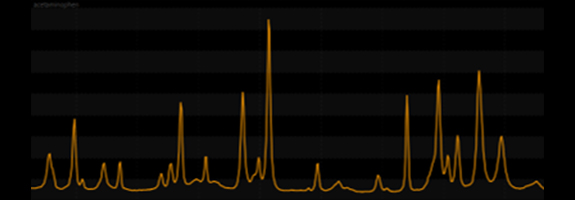
Raman spectroscopy is a technique based on the scattering of monochromatic light, usually from a laser. A small fraction of the excitation light is in-elasticly scattered at frequencies that are shifted from the fundamental by vibrational or rotational frequencies of the molecule. Raman spectroscopy can be used to study solid, liquid, and gaseous samples.

Laser Induced Breakdown SpectroscopyLaser Induced Breakdown Spectroscopy
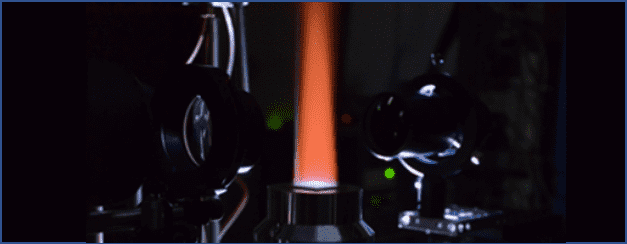
In LIBS, a short laser pulse is focused on a sample. Laser energy heats, vaporizes, atomizes, and ionizes sample material generating a small area of plasma. Excited atoms and ions in plasma emit secondary light which is collected, spectrally resolved by spectrophotometer and analyzed by light detector. Each chemical element has a unique “spectral signature” which can be discriminated from the obtained spectra, thereby permitting determination of the multi-elemental composition of the sample.

Fluorescence SpectroscopyFluorescence
Fluorescence is a “fast” photo-luminescence. The effect is widely used in such everyday practical applications as industrial and residential lighting (neon and fluorescent lamps), as an analytical technique in science and as a quality and process control method in industry.

Luminescence SpectroscopyLuminescence
Luminescence is a light emission which represents an excess over thermal radiation, and lasts for a time exceeding the period of electromagnetic oscillation.

NIR SpectroscopyNIR
NIR spectroscopy is the measurement of absorbed light that is directed on a sample in the wavelength region of 780 to 2500 nm. It is a non-destructive method of molecular analysis, providing excellent quantitative data and requiring little to no sample preparation.

Absorption SpectroscopyAbsorption
Optical Absorption is explained by the corpuscular theory of light. It is viewed as a process of photon collisions with atoms in which photon energy is absorbed by electrons, causing electrons to shift to high energy excited states. Absorption Spectroscopy measures the portion of the incident light absorbed by material as a function of light wavelength.


Reflection SpectroscopyReflection
Optical Reflection is a wave phenomenon viewed as a sudden change in the direction of the light wave front at the boundary between two media with different refraction indices. Reflection Spectroscopy measures the portion of the incident light reflected from a media surface as a function of a wavelength and polarization.

Transmission SpectroscopyTransmission
Optical Transmission defines what portion of the incident light is transferred through material, usually transparent or semitransparent. Transmission Spectroscopy measures that portion of light as a function of light wavelength.