
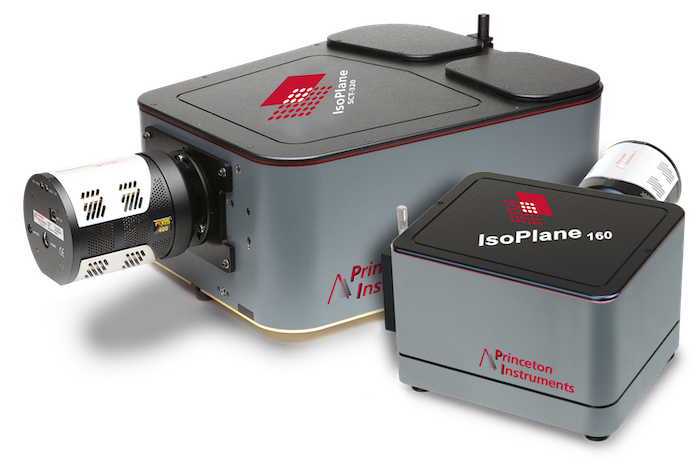
The IsoPlane® is the best imaging spectrometer in its class. With a unique optical design, it completely eliminates astigmatism across the focal plane for superior multichannel capabilities. With fast optics and specialized mirror coatings it ensures maximum throughput and signal-to-noise performance.
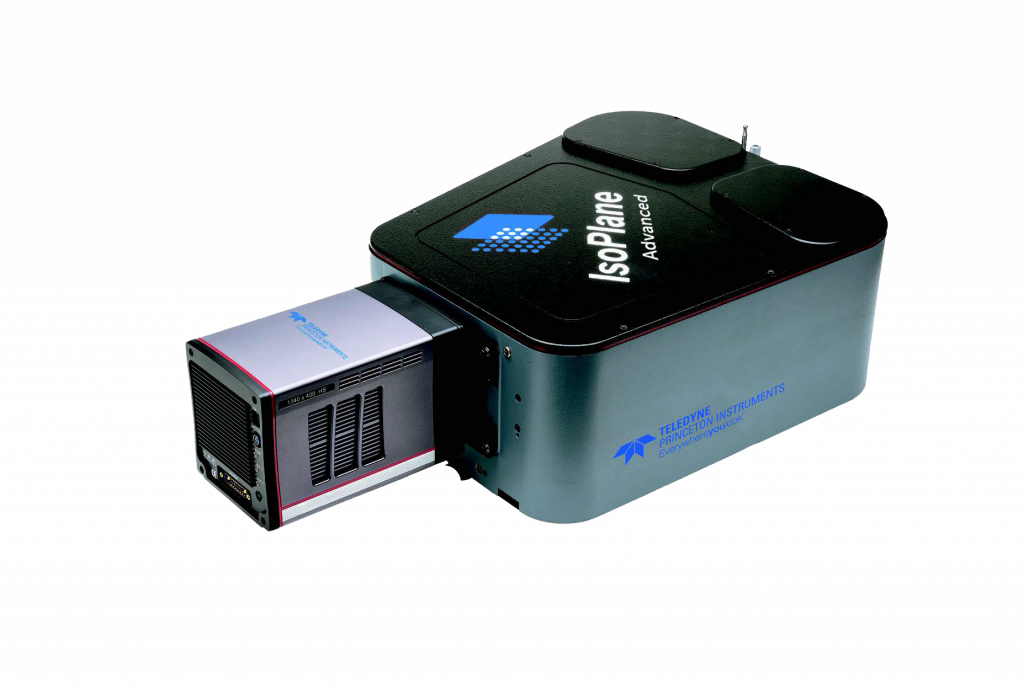
The best just got better! Introducing the new IsoPlane Advanced, with proprietary optics for improved image quality, finer spectral resolution, and superior multichannel spectroscopy capabilities.
- Patented astigmatism free Schmidt-Czerny-Turner design
- High spectral resolution
- Superior signal-to-noise ratio
- Compatible with the unique Intellical wavelength and intensity calibration, and Lightfield data acquisition and control software
Advantages of IsoPlane-320A Advanced
All of the IsoPlane advantages, plus:
- Ability to image >200 distinct spectral channels on 2D arrays, for unmatched multichannel spectroscopy and hyperspectral imaging capabilities
- Superior MTF and spectral resolution
Key Features

Patented, Aberration-Free Design
The IsoPlane-320 and 320A Advanced deliver zero-astigmatism at all wavelengths across the focal plane giving high spatial resolution.
Unmatched optical performance with the ability to resolve >75 optical fiber channels (standard IsoPlane-320) and >200 channels (IsoPlane-320A Advanced) on CCD and CMOS cameras up to a height of 22 mm.
Users of the new IsoPlane-320A have even pushed the number of input channels to 400 fibers for snapshot hyperspectral imaging applications.
High Fluence
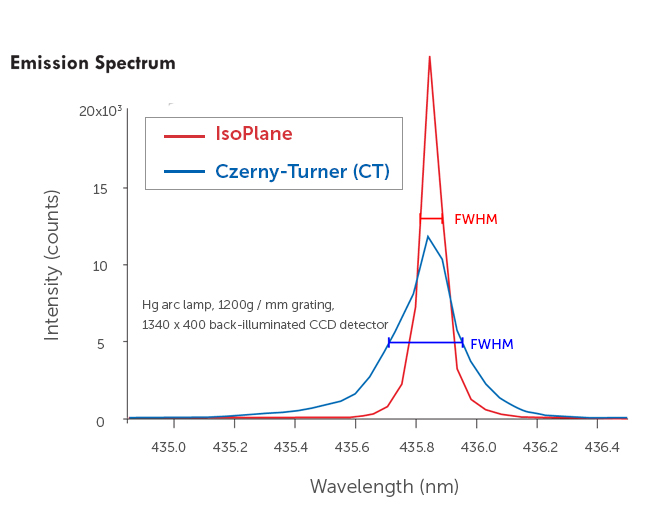
With more photons per pixel the IsoPlane increases spectral resolution and contrast. Traditional Czerny-Turner spectrographs can only measure broad, misshapen and short emission lines.
However, the IsoPlane measures emission lines with half the width and twice the height, providing spectra with better resolution, maximising sensitivity and signal-to-noise ratio.
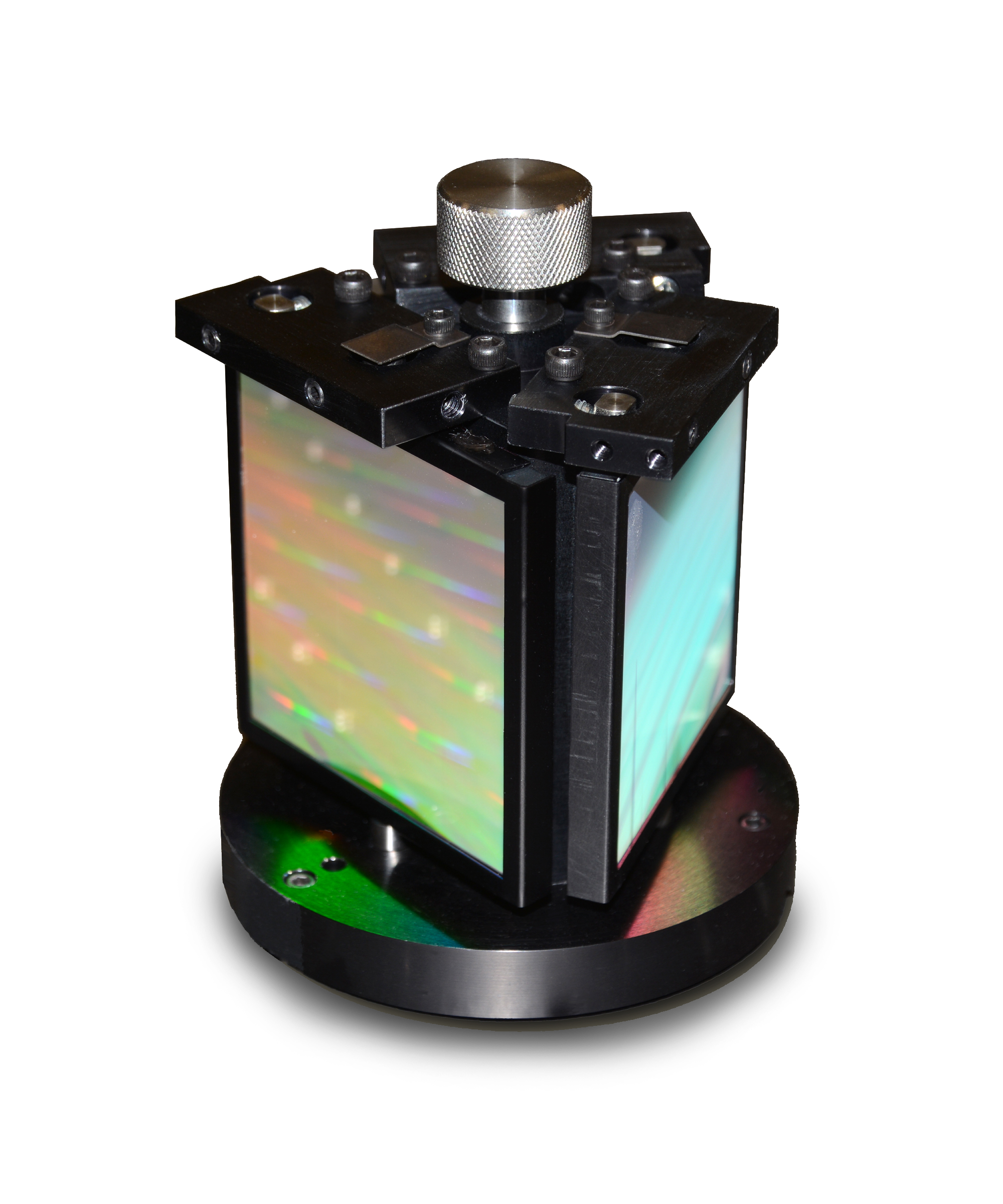
Total Control of Triple-Grating Turret
Access up to 9 gratings using the triple grating turrets. The IsoPlane delivers complete experimental flexibility with software-selectable wavelengths allowing access to any region from the UV to mid-IR range.
Using a single mouse click, diffraction efficiency and resolution can be optimized for any experiment, showcasing the ease and precision of the IsoPlane.
High-Efficiency Optical Coatings
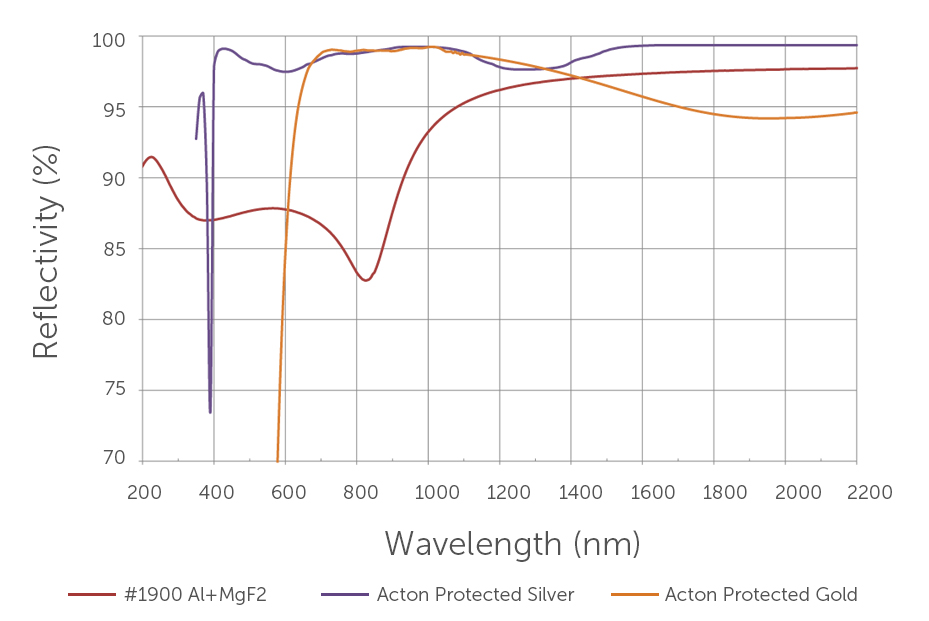
Through the use of Acton #1900 enhanced-aluminium mirrors, the highest reflectivity can be achieved from 193 nm to mid-IR range.
Optional silver coatings provide an average of 98% reflectivity with optional gold coatings available for NIR imaging.
Powered by LightField software
Powerful and intuitive software with built-in math engine allows for the complete control of cameras and spectrographs, with real-time image analysis and spectral data.
LightField software provides seamless integration of hardware controls and direct data acquisition into programmes such as National Instruments’ LabVIEW® and MathWorks’ MATLAB®. This software also fully supports IntelliCal automated wavelength and intensity calibration.
Family Specifications
| Scan range | 0 – 1400 nm with a 1200g/mm grating |
|---|---|
| Focal plane size | 27 mm x 14 mm (IsoPlane-160) 27 mm x 22 mm (IsoPlane-320/320A) |
| Astigmatism | 0 for IsoPlane-320/320A <100 μm for IsoPlane-160 |
| Supported interfaces | USB and RS-232 |
| Wavelength accuracy | ± 0.2 nm |
| Number of turrets allowed | 3 turrets with 3 gratings each |
| Grating change repeatability | 0.02 nm |
Spectrometer Models
Software and Accessories
| Software and Accessories | Description |
| LightField | Control your spectrometer with state of the art software |
| IntelliCal | Calibrate both wavelength and intensity |
| Fiber Bundles | Various fiber bundles for all experimental needs |
| Filter Wheels | Range of filter wheels to isolate desired wavelengths |
| Single Channel Detector | Efficient operation from UV to IR |
| Light Sources | Various light sources for UV-VIS-IR operation |
| Grating and Turret | Multi-grating turrets for efficient light throughput over a broad spectral region |
| Gratings | Multiple diffraction grating options to separate polychromatic light |


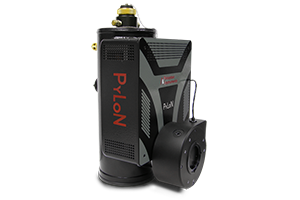
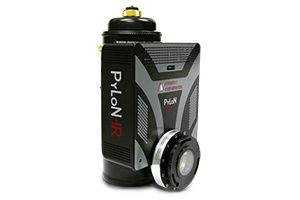
Current Research
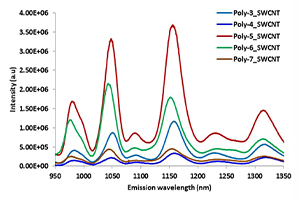
Customer Stories
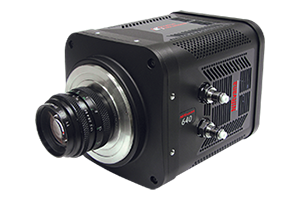
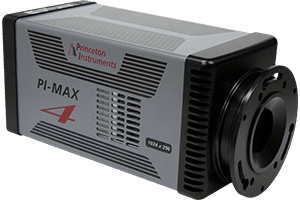
Stories from current researchers using our cameras and spectrometers to further enhance their research.

Research Stories
Featured stories of exciting research using our cameras and spectrometers.
Published Research
Compilation of published research achieved using our cameras and spectrometers.